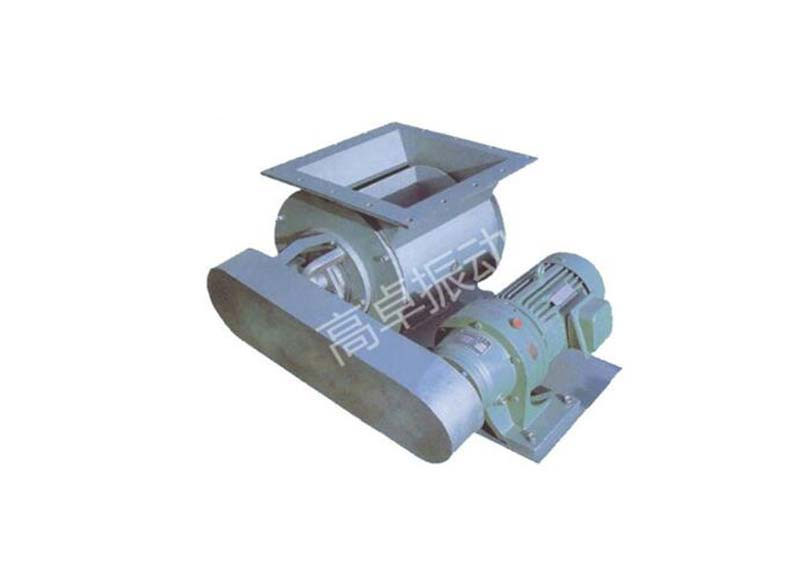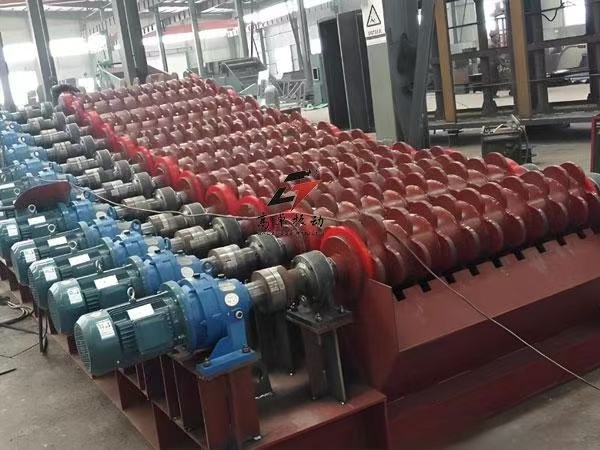
The GZS series raw coal classifying screen (roller screen) operates with a linear motion trajectory. It is designed for material classification applications in coal, mining, metallurgy, building materials, electric power, water conservancy, light industry, chemical industry and other industries. The equipment improves the working efficiency of crushers, while reducing their power consumption and metal wear. The roller screen offers wide adaptability to various materials and demonstrates outstanding performance especially in handling high‑moisture coal, with a strong resistance to clogging.
1 Structure of the Raw Coal Classifying Screen
The GZS raw coal classifying screen mainly consists of a frame, screen sheets, hard‑tooth surface reducers, screen shafts, bearing pedestals, a screen box and other components.
2 Working Principle of the Raw Coal Classifying Screen
The GZS raw coal classifying screen adopts chain drive to rotate individual shafts, pushing materials forward along the screen surface and loosening them simultaneously. Particles smaller than the screen gap fall through the spaces between screen shafts under their own weight and the rotational force of the shafts. Particles larger than the screen gap remain on the screen surface, move forward continuously and are discharged into the crusher, thus completing the screening process.
3 Features of the Raw Coal Classifying Screen
The raw coal classifying screen is characterized by simple structure, stable operation, vibration‑free running, low noise, low dust emission and high processing capacity.
4 Roller Shaft Commissioning
4.1 No‑load Operation
-
Inspect anchor bolts of the machine body and motor, and ensure all connecting fasteners are securely tightened.
-
Remove all foreign objects from the screen surface, and confirm no collision or jamming occurs between moving and stationary components.
-
Verify that baffle positions match the operating mode.
-
Check that the oil level in the reducer is normal and all lubrication points are sufficiently lubricated.
-
Ensure all inspection covers are intact and set screws are fully tightened.
-
No‑load commissioning may begin only after the above inspections are completed.
-
Switch on the power and perform an inching start; formal trial operation may proceed only after normal startup. The machine shall run continuously for no less than 2 hours.
-
During no‑load operation, closely monitor the flexibility of all rotating parts, bearing temperature changes, current stability, and any abnormal vibration or noise.
4.2 Load Operation
-
Load operation may commence only if no abnormalities are detected during no‑load running.
-
During feeding, continuously monitor current values, bearing temperature changes and vibration of body bearings. Shut down the equipment immediately for inspection and troubleshooting if any abnormality is found.
-
Except in emergency situations, shutdown during feeding is generally prohibited.
-
For normal shutdown, stop feeding first and shut down the machine only after all materials in the screen are completely discharged.
-
Opening inspection covers or performing maintenance work is strictly prohibited before the screen comes to a full stop.
5 Operation and Maintenance of the Raw Coal Classifying Screen
Startup and Shutdown
The screen is installed in the conveying system and can operate in interlocked mode with the system. During startup, start equipment downstream of the raw coal classifying screen first, followed by the screen and upstream equipment. Uniform feeding onto the screen is permitted only after stable operation is achieved. The shutdown sequence is reversed. The machine must be shut down only after the screen surface is completely free of materials; load starting is strictly prohibited.
Routine Maintenance
-
After new installation or major overhaul, perform an inching start before continuous operation. The machine shall run continuously for at least 2 hours. Check the flexibility of rotating parts and whether bearing temperatures are within normal range.
-
After the screen is put into service, regularly inspect its operating conditions and replace lubricating oil at scheduled intervals. Maintain proper lubrication of all lubricated components; refer to the reducer manual for specific requirements.
-
Monitor for abnormal vibration and overheating. The ambient operating temperature ranges from -25℃ to +40℃, and the reducer temperature shall not exceed +80℃ during operation.
-
Screen shafts shall rotate flexibly and smoothly. Stop operation immediately if any screen shaft fails to rotate, and notify maintenance personnel for inspection and repair.
-
Foreign materials tend to accumulate under the scraper blades during operation. Clean the area every 1–2 months to avoid excessive buildup that shortens the service life of screen sheets.
-
Maintain sufficient on‑site lighting, intact communication equipment, and flat, unobstructed passages. Keep the area free of flammable and explosive materials, and ensure complete fire protection facilities.
-
During operation, monitor working conditions including motor current, bearing temperature, operating noise, joint tightness and fastening status of connecting bolts.
-
After equipment shutdown, operators shall inspect the screen surface for residual materials and remove any buildup if present.