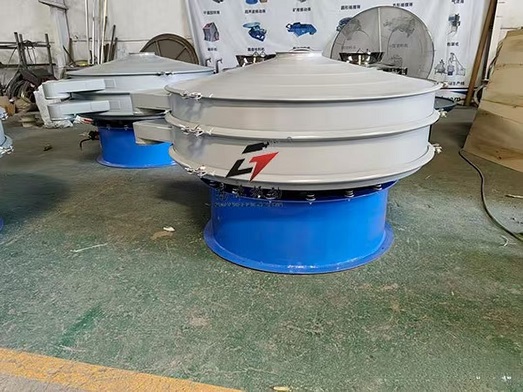
The all-carbon steel rotary vibrating screen is industrial-grade vibrating screening equipment manufactured with carbon steel as the primary material. It realizes high-efficiency material screening, filtering and classification via 3D composite vibration technology that integrates horizontal, vertical and inclined movements.
Ⅰ Material & Structural Features
Built with full carbon steel, the machine features a robust and durable structure, ideal for screening conventional materials with low to moderate corrosion resistance requirements.
Select models adopt sandblasting surface treatment to boost wear resistance, rust prevention and overall service life.
Equipped with rubber bouncing balls or ultrasonic auxiliary mesh cleaning systems, the equipment effectively lowers the risk of mesh blockage.
The fully enclosed design eliminates dust and liquid leakage, meeting stricter environmental protection standards.
Ⅱ Core Performance Advantages
⒈High-Efficiency Screening
It supports large processing capacity and continuous operation, delivering superior screening efficiency for precise grading of powders, granules and viscous fluids such as starch, Chinese herbal powder and metal powder.
⒉Hassle-Free Maintenance
Screen mesh replacement takes only 3–5 minutes, allowing quick adjustment of screening specifications.
With a simplified structure, wearing parts including screen meshes and bouncing balls feature low costs and are easy to replace.
Ⅲ Main Application Industries
⒈Construction & Building Materials
Screens sand, gravel, cement and refractory materials to improve aggregate uniformity.
⒉Chemicals & Metallurgy
Classifies resins, coatings and metal powders (aluminum powder, copper powder and more) and filters chemical slurries.
⒊Food & Pharmaceuticals
Conducts fine screening of starch, milk powder and Chinese herbal powder to guarantee product purity.
With exceptional durability, high screening efficiency and flexible customization options, the all-carbon steel rotary vibrating screen is widely applied in construction, chemical, food and other industries, especially for cost-sensitive screening scenarios with no high anti-corrosion requirements.